
Back to all courses
Back to all courses
MSMWHS217
MSMWHS217 – Gas Test Atmospheres
Test the air. Know the risk. Make it safe.
You cannot always see or smell a dangerous atmosphere but the right training can help you detect it before someone enters the area.
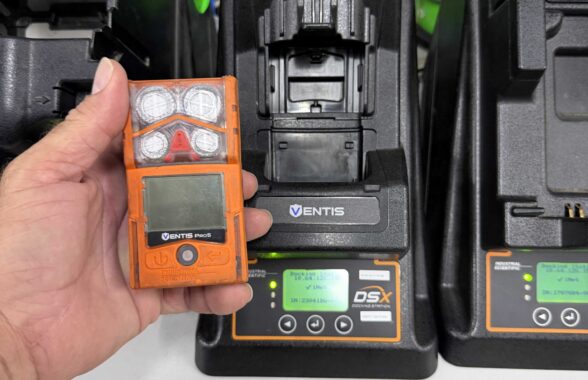
The MSMWHS217 Gas Test Atmospheres course gives you the practical skills and knowledge required to use electronic gas testing equipment, interpret atmospheric readings and determine whether an area is safe for the proposed work.
This nationally recognised unit is ideal for workers who may need to test or monitor atmospheres in confined spaces, tanks, pits, vessels, pipes, enclosed areas or locations where hot work and other hazardous activities are carried out.
What You’ll Learn
This practical, hands on course will teach you how to:
- Recognise when atmospheric testing is required
- Identify potential gases, vapours and airborne contaminants
- Select and prepare suitable gas-testing equipment
- Complete equipment checks and confirm the monitor is ready for use
- Select and correctly use personal protective equipment
- Follow the required testing sequence and sampling pattern
- Test oxygen, flammable gas and toxic contaminant levels
- Understand upper and lower explosive limits
- Interpret gas-monitor readings and exposure limits
- Identify unsafe or unacceptable atmospheric conditions
- Record and clearly communicate testing results
- Take appropriate action when readings are outside safe limits
- Conduct ongoing atmospheric monitoring when required
- Clean, inspect and store gas-testing equipment correctly
You will develop the ability to recognise atmospheric hazards, apply controls and communicate safety conditions clearly to workers, supervisors and permit personnel.
Who Should Enrol?
This course is ideal for:
- Confined space workers and standby personnel
- Mining and resources workers
- Construction and civil personnel
- Maintenance and shutdown crews
- Oil, gas and processing workers
- Permit holders and permit-issuing personnel
- Workers involved in tank, vessel, pit or pipeline activities
- Anyone required to test an atmosphere before or during work
Know What Is in the Air Before You Enter
Atmospheric testing is more than switching on a gas monitor. It requires correct preparation, accurate sampling and the confidence to stop the job when conditions are unsafe.
Our experienced trainers use practical equipment and realistic workplace scenarios to help you confidently test atmospheres, understand the readings and make informed safety decisions.
Switch it on. Test the atmosphere. Know before you go. Book your gas-testing training today.
MSMWHS217 has no prerequisite units and had no specific licensing, legislative or certification requirements at the time of publication. Workplace, site and jurisdictional requirements may still apply.
Duration: | 0.5 Days |
|---|---|
Delivery Method: | Face to face, at your site |
What to Bring: |
As this unit is delivered at your site, students need site PPE. |
UNITS OF COMPETENCYThe unit is comprised of 1 unit of competency. All unit requirements must be satisfactorily completed to be deemed Competent. |
|
ENTRY REQUIREMENTSParticipants will learn to monitor atmospheres within confined space and other areas, at worksites within Civil construction, Mining, Drilling and Extractive industries. Students must:
|
|
CLASS BASED COURSE STRUCTUREThis program will be delivered face-to-face, with classroom-based learning and assessment. This unit is made up of: Face-to-face Classroom-Based Learning Students are required to attend face-to-face classroom-based training sessions. The face-to-face classroom-based component of this program is specifically designed to address the learning needs of the student cohort, promoting active participation and skill development through various engaging training techniques, including:
Simulated Work / Industry Environment
|
|
CLASS BASED COURSE DURATIONThe program is typically delivered over 6 hours (1 day) and can be adapted to suit individual student needs and business requirements. The program includes:
The actual duration will vary based on each student’s prior knowledge, skill level, and active participation. Additional learning support is available to ensure students are well-prepared for assessment activities. |
|
DATES, LOCATION AND COSTLexmar delivers and assesses this unit face-to-face at the student’s workplaces. Program pricing will be provided based on your specific business needs and participant numbers. To receive a quote, including program delivery options and costings, please contact Lexmar Training. |
|
STUDENT SUPPORTLexmar Training offers a range of learning support services and access to networks to ensure ongoing engagement and motivation. Educational and support services can include:
|
|
SKILLS RECOGNITIONCredit Transfer is available for unit of competency MSMWHS217 Gas test atmospheres. Credit Transfer is a process that grants credit for Units of Competency previously achieved through formal and accredited training. To obtain Credit Transfer for individual units of competency that have been completed previously, students must provide the enrolling officer with official transcripts for Units of Competency achieved within a nationally recognised qualification at the time of enrolment. These transcripts will be verified and applied where relevant. Skills Recognition, commonly referred to as Recognition of Prior Learning (RPL), is an assessment process that evaluates an individual’s formal, non-formal, and informal learning to determine the extent to which the individual has met the competency standards. |
|
ENROLAll students must complete an enrolment. You will receive further information from Lexmar Training to begin your enrolment process. As part of the enrolment, students maybe required to undertake a Language, Literacy, Numeracy and Digital (LLND) Skills Assessment. This assessment helps determine your suitability for the program and ensures that your current skill levels align with the unit requirements. Submitting an enrolment does not guarantee a place in the program. Lexmar Training carefully reviews each application to ensure students are placed into units where they are most likely to succeed. Additional information and documentation may be required to process applications, including:
A USI is your individual education number for life. It creates a secure online record of your VET training in Australia since 1 January 2015. Visit the USI website to:
Lexmar Training can create a USI on your behalf. If you wish Lexmar Training to do this on your behalf, contact Lexmar Training at admin@lexmartraining.com.au |
|
